Bonjour mes amis!
Every trip I help plan to the south of France begins the same way — with someone spreading a map across a kitchen table and asking, mais où exactement? But where exactly? The south is not one place. In fact, it is three, sitting side by side along the Mediterranean like sisters raised in the same house who turned out nothing alike.
So, we drew you a South of France map. It runs from the Spanish border to Menton on the Italian side, and it marks the beaches, the Roman ruins, the walled cities, the wine country and the hill villages worth the detour. Underneath it I have written down what I would tell you over a glass of rosé: where to swim, what to see, what to eat, and how long to give yourself.
We will start with the three regions. Once those make sense, everything else falls into place.
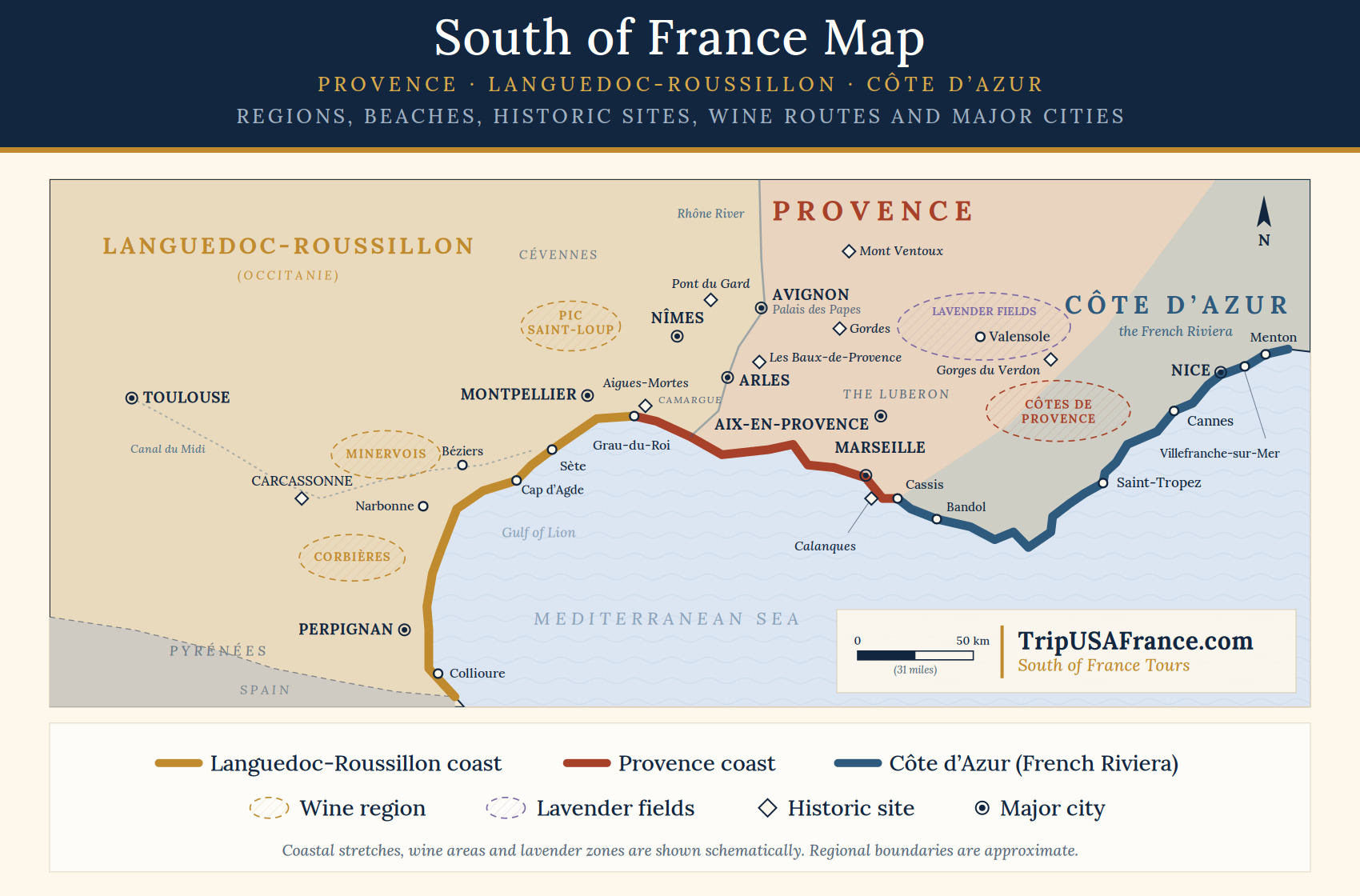
How to Read This South of France Map
The coast is colored by region: gold for the Languedoc-Roussillon shoreline, rust for the Provence coast, teal for the Côte d’Azur. Dashed ovals mark the wine regions. Diamonds are historic sites you can visit in a morning.
What surprises most American visitors is how close everything sits. Nice to Marseille is a little over two hours by car. Montpellier to Carcassonne is ninety minutes. Avignon, Nîmes and Arles form a triangle you can drive across in under an hour. So you can see a great deal in a week without ever spending more than two hours behind the wheel in a single day.
If Normandy is also on your itinerary, our Normandy map and guide does the same job for that coast.
The Three Regions of the South of France
Americans tend to use “the south of France” and “Provence” as though they were the same thing. They are not, and knowing the difference will save you a great deal of driving. Here is how I explain it to our travelers. If you want the short version — the sights rather than the geography — start with our list of things to do across the south.
Languedoc-Roussillon: the south before it got expensive
The western half, stretching from the Rhône down to the Spanish border, is now officially part of Occitanie — though almost nobody calls it that in conversation. This is where you find Carcassonne, the Canal du Midi with its plane trees leaning over the water, the fishing port of Sète, and Collioure, where Matisse and Derain invented Fauvism because of the light. The coastline is long, flat and sandy, and in September you can still find a stretch of it to yourself. Wine here is serious and inexpensive. So is dinner.
Provence: villages, markets and Roman stone
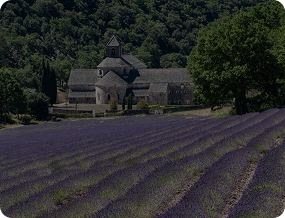
Provence runs from the Rhône east toward the Alps, and it is the south of the imagination — the one Peter Mayle wrote about. Avignon and its Palais des Papes, the arena at Arles, the hill villages of the Luberon, the lavender on The Plateau of Valensole, the Camargue with its white horses and pink salt pans. and the Pont du Gard sit just over the administrative line in Occitanie, but say that in Nîmes and see how it goes. So come for the markets, which are the real institution here, and plan your week around market days rather than monuments.
The Côte d’Azur: where the mountains fall into the sea
The Riviera proper runs from Cassis east to Menton, and it is the most dramatic coast in France because the hills come straight down to the water. Nice, Cannes, Saint-Tropez, Villefranche-sur-Mer, the calanques outside Cassis. It is also the most expensive part of the south by a wide margin, and in August it is very full. Usually, two nights here at the end of a trip beats a week — unless the beach is the whole point, in which case give it as long as you like.
The big cities deserve their own conversation. Marseille, Montpellier, Aix and Toulouse each earn a day, and we have ranked the cities of the south separately.
Prefer not to drive?
Take our 8-Day small-group SOUTH OF FRANCE Tour
Or our 8-Day small-group SPECIAL LAVENDER Tour
Discover the Pristine Beaches of Southern France
The Riviera gets the attention, and it earns it — the water really is that color. But the south has two coasts, not one, and they could not be less alike. East of Cassis you get pebbles, cliffs, beach clubs and prices to match. West of the Rhône you get sand, space and a great deal less money spent. We will take the famous one first.
Nice Beaches: A Blend of Pebbles and Azure
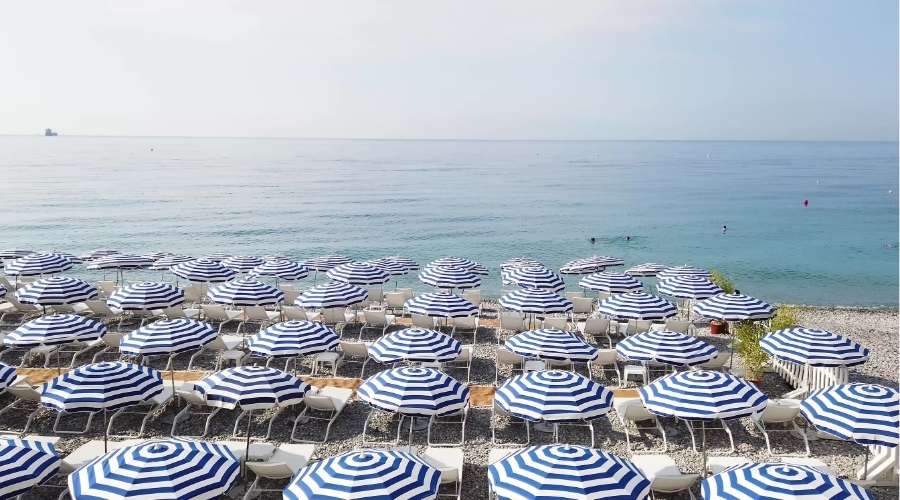
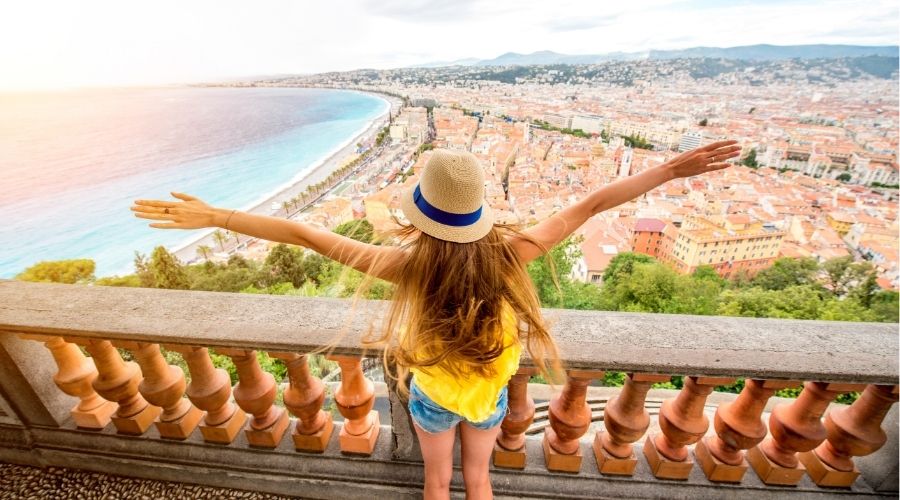
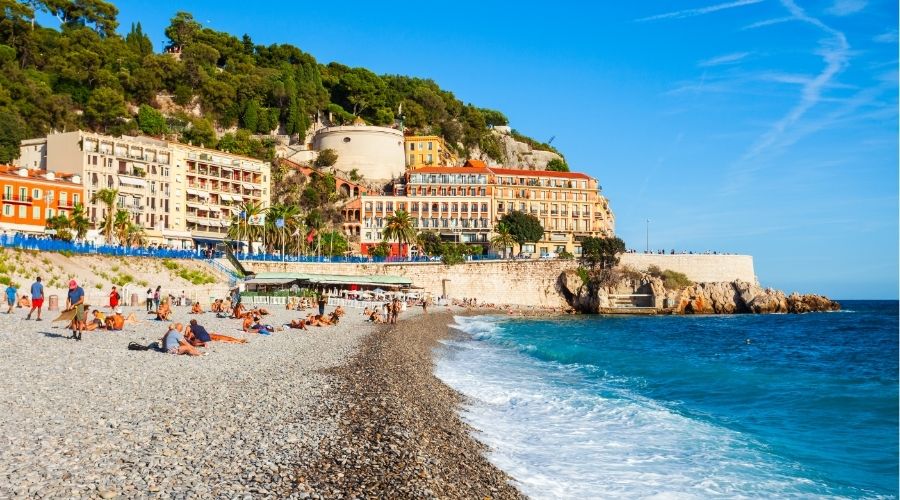
This is the quintessential city of the French Riviera, boasting beaches that rank among the area’s most celebrated and frequented. Nice is pebbles, not sand — smooth grey stones that stay clean but are punishing on bare feet. Bring water shoes and a mat. Nobody tells you this and everybody wishes they had known. Clear water, and the color really does turn at sunset. The beaches are accessible via the Promenade des Anglais, a sprawling esplanade that hugs the picturesque seafront. You’ll find a mix of public and private beaches, each offering its unique amenities and entry fees. Notable public beaches include Plage Beau Rivage, Plage du Centenaire, and Plage du Ruhl, while top-tier private shores like Castel Plage, Blue Beach, and Opera Plage offer elevated luxury.
Cannes Beaches: The Glitz and Glam
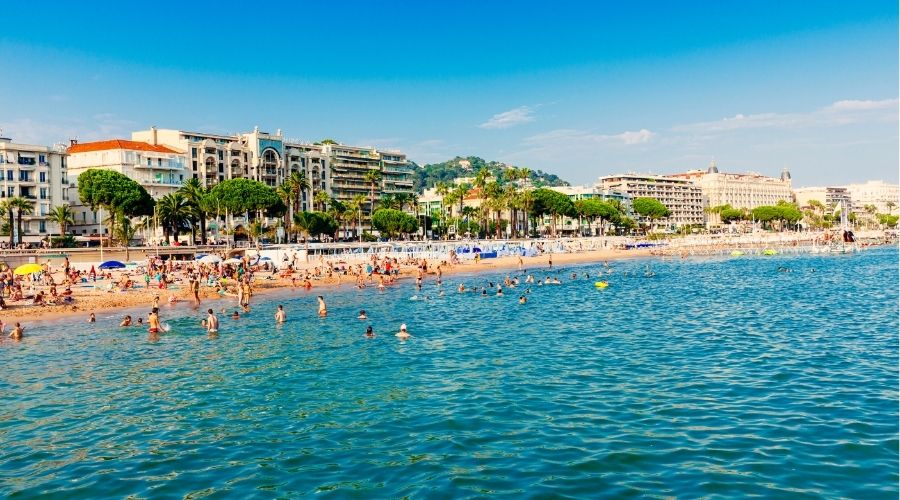
This famous A-list town has the film festival, the yacht harbor and the sand. That last part matters. Nice is pebbles; Cannes is soft and golden. The beach splits in two. La Croisette is the famous half, lined with private clubs attached to the grand hotels — a lounger, an umbrella, a towel and a waiter, for a price. La Bocca, west of the port, is the local half: public beaches, free parking, plain facilities, room to spread out. We send most travelers to La Bocca and let them walk La Croisette in the evening.
St. Tropez Beaches: Where the Jet Set Lounge
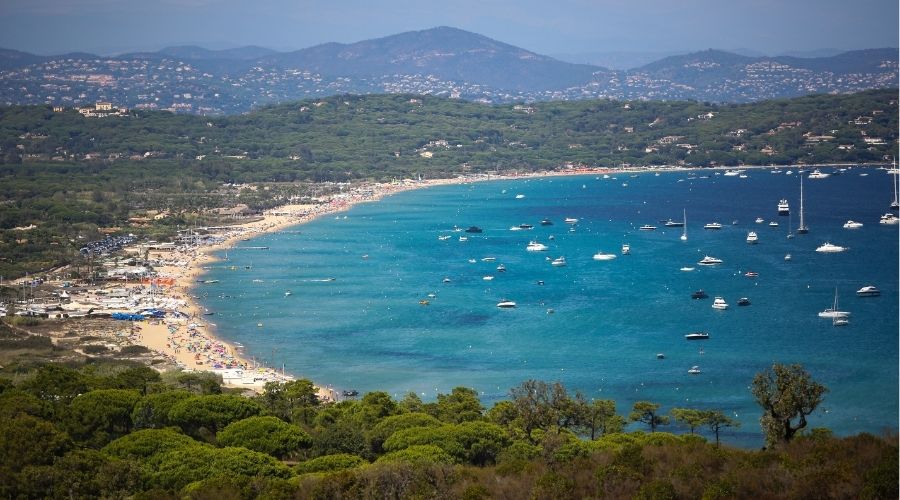
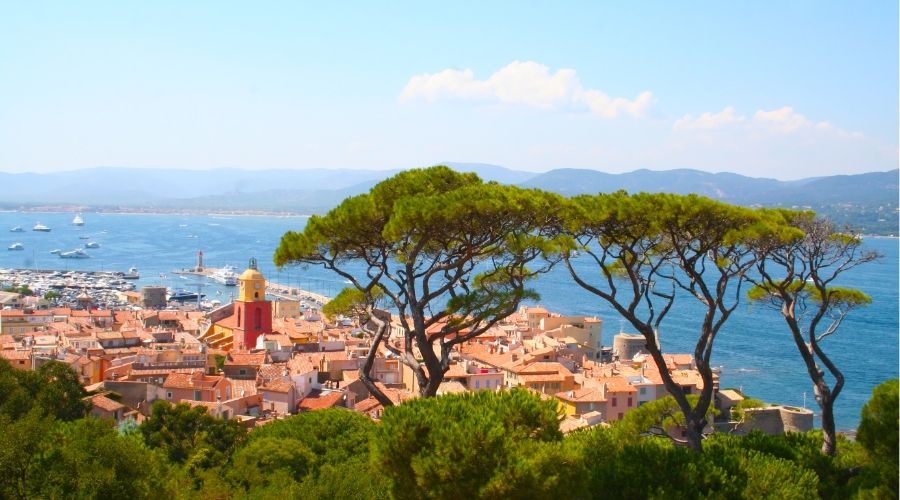
Renowned as a sun-drenched haven for the world’s elite, St. Tropez is synonymous with summer escapades for the wealthy and celebrated. This quaint village is home to a diverse array of shorelines, ranging from hidden coves to expansive sandy expanses. The most famous is Pampelonne, about three miles of sand lined with beach clubs and boasting some of the most luxurious beach clubs on the globe. This is where one can rub shoulders with the stars, sip on fine champagne and cocktails, and lose themselves to the beats spun by renowned DJs. Noteworthy spots along this beach include Club 55, Nikki Beach, and Bagatelle. If tranquility and unspoiled beauty are what you seek, venture towards Plage de l’Escalet, Plage de la Moutte, or Plage des Salins, where less crowded, picturesque settings await.
Hidden Gems: Villefranche-sur-Mer and the Calanques of Cassis
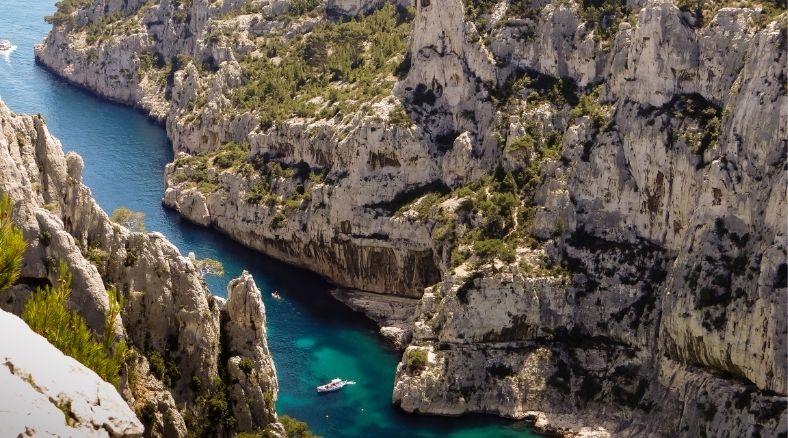
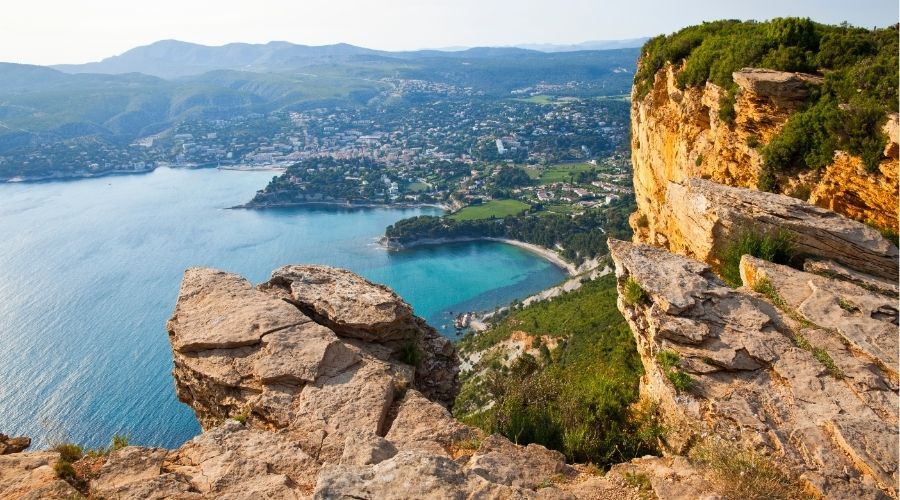
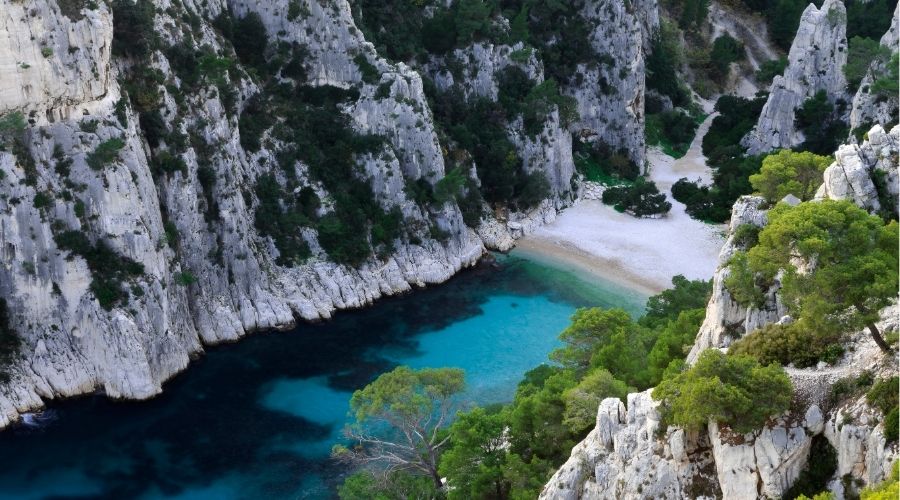
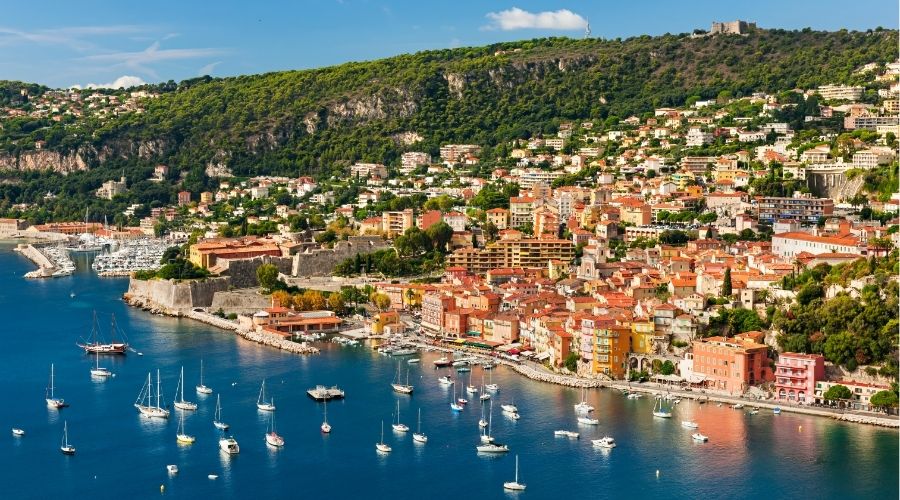
Keen on a respite from the bustling locales? The French Riviera’s lesser-known treasures, such as the beaches of Villefranche Sur Mer and Cassis, offer a serene escape. Nestled between Nice and Monaco lies Villefranche Sur Mer, with its quaint Plage des Marinières, where crystal-clear waters and soothing waves converge to create an idyllic beach experience. Stroll through the historical town, the citadel, and the vibrant port area, filled with inviting restaurants and cafés. On the other hand, the enchanting village of Cassis boasts the splendid Plage de la Grande Mer. Tucked in the village center, this small beach features soft sand and peaceful waters. Don’t miss the boat tours to the calanques, a string of breathtaking narrow inlets framed by towering cliffs, where you can swim and snorkel in secluded, azure waters.
The Languedoc Coast: Sand, Space and Fewer Crowds
Between Montpellier and the Spanish border, the shoreline flattens out into long sandy beaches that never quite fill up.
, where our 8-Day South of France Tour stays and where our 8-Day Special Lavender Tour spends half of the nights, sits at the western edge of the Camargue, a fishing village whose boats still go out at dawn, with the ramparts of Aigues-Mortes a few minutes inland. The town has eleven miles of sand in all, and the wildest of it is l’Espiguette, a long run of dune and beach with almost nothing built on it. Hemingway honeymooned here in 1927 and liked the place enough to set the opening of a novel in it.
Sète is a working fishing port built across a canal, with the best seafood on this stretch and a rough charm the Riviera lost decades ago.
Cap d’Agde has wide family beaches and shallow water. Furthest south, Collioure curls around a bell tower that stands in the water itself — a small pebble bay, anchovies cured in the village, and the light that pulled the painters here in 1905. So if your ideal beach day involves parking without a fight, come west.
Voyage Through History: Key Historical Sites in Southern France
The south is not only scenery. Rome built here for four centuries, and the stone is still standing. Then came the popes, the crusaders and the Cathars, each leaving something behind you can walk into. These are the ones worth your time.
Avignon’s Papal Legacy
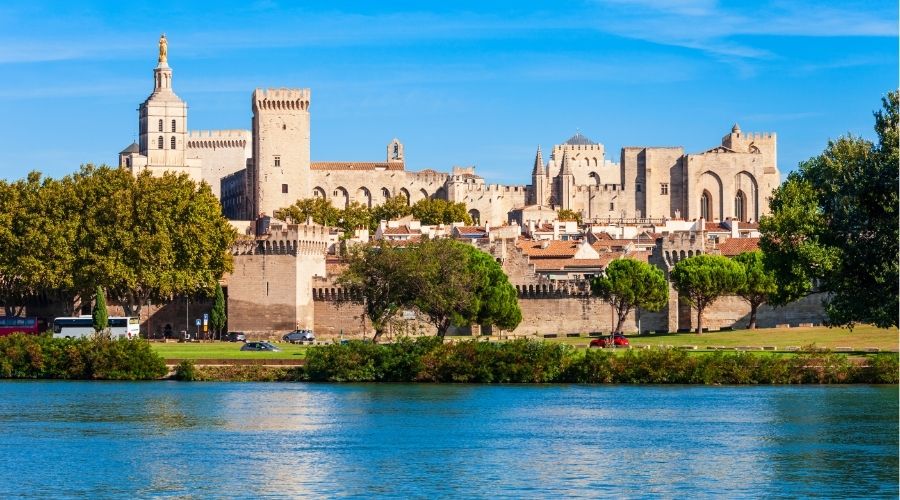
Avignon holds a special position in the annals of the Catholic Church’s history. During the 14th century’s turmoil, the popes sought refuge from Rome and settled in Avignon, constructing the Palais des Papes—an icon of Gothic architecture and symbol of ecclesiastical power. The largest of its kind, the palace captivates with its opulent chambers, frescoes, chapels, and treasuries. A tour not only reveals its grandeur but also delves into the Avignon Papacy saga, a 70-year epoch that left an indelible mark on the Church’s legacy.
The Roman Footprint in Nîmes
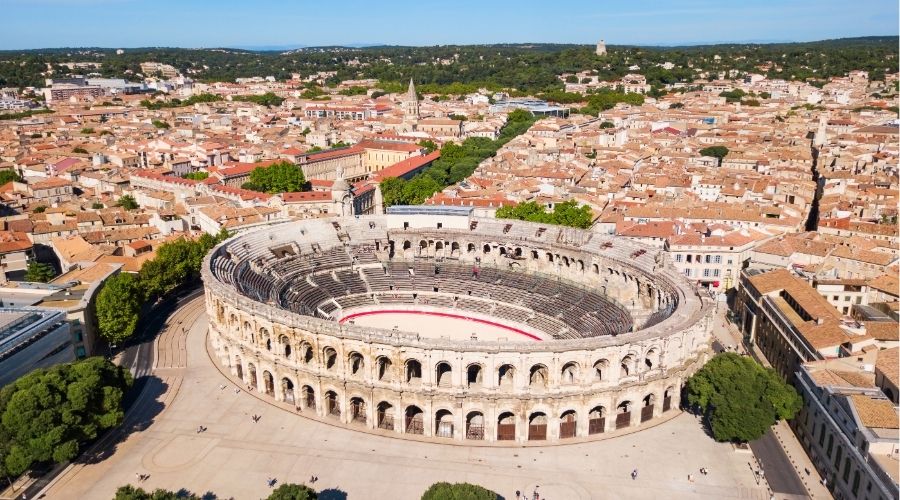
The enchanting city of Nîmes is a treasure trove of ancient Roman architecture, boasting some of the most remarkable examples in France. Take, for instance, the iconic Roman amphitheater, an engineering marvel dating back to the 1st century AD and one of the best-preserved in the entire world. Built to hold some 24,000 spectators in Roman times — it seats around 16,000 for concerts today — it staged gladiator combat, animal hunts, and a plethora of public spectacles. Nowadays, this historical gem continues to pulse with life, hosting vibrant concerts, festivals, and bullfights.
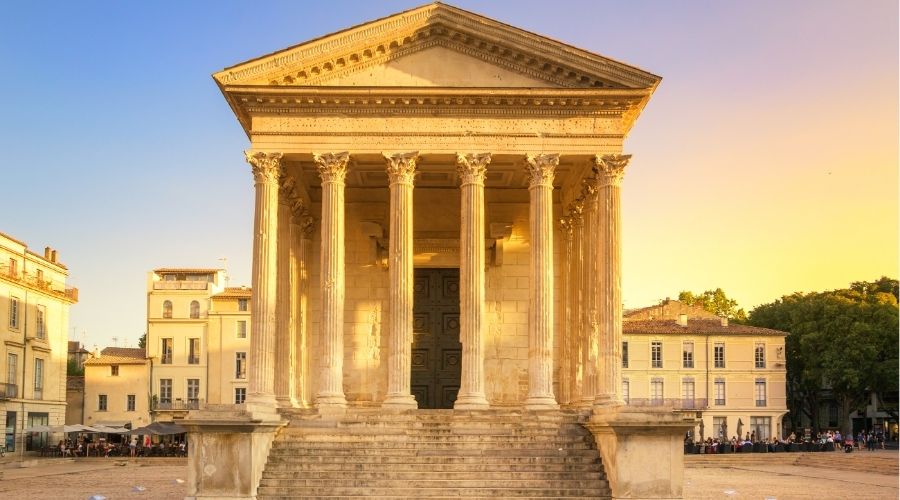
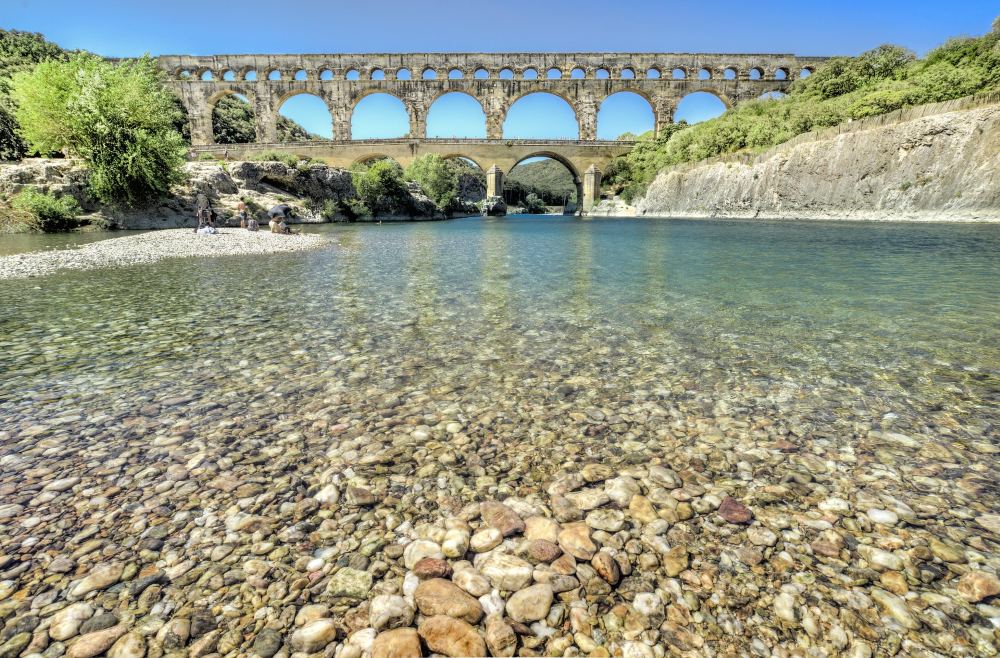
Apart from the amphitheater, Nîmes is also home to the Maison Carrée, a beautifully preserved temple that once served the imperial cult, the towering Tour Magne, an integral part of the ancient city defenses, and the awe-inspiring Pont du Gard, an aqueduct that stands as a testament to the engineering prowess of the Romans, once supplying life-giving water to the city. Tickets, opening hours and the summer light show are on the official Pont du Gard site.
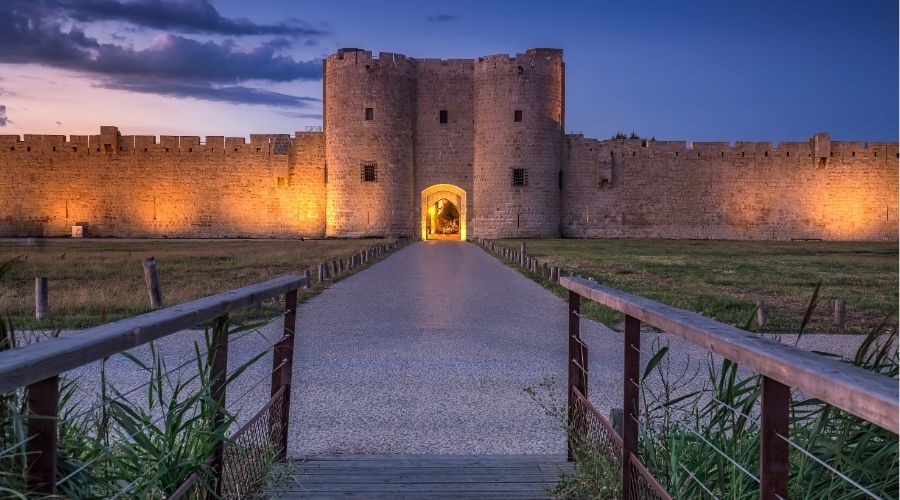
Medieval Wonders: Carcassonne and Aigues-Mortes
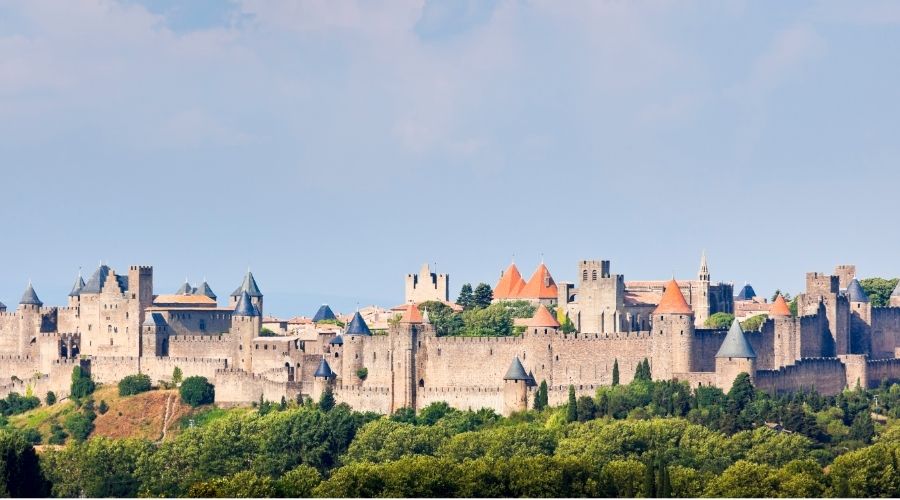
Carcassonne is the largest walled city in Europe, and the first sight of it from the road is genuinely startling: a double ring of walls and 52 towers standing on a hill above the Aude. Inside there is a castle, a basilica and a tangle of narrow streets. Walk the ramparts. Then leave the walls and eat in the lower town, where the prices are half and the food is better.
Aigues-Mortes is the opposite of Carcassonne: flat, square, and set down in the marshes. Louis IX built it in the 13th century because France had no port on the Mediterranean and his crusades needed one. You can walk the entire circuit of ramparts — roughly a mile — in about an hour. Climb the Tower of Constance while you are up there. Protestant women were imprisoned in it for decades after the Wars of Religion.
Arles & Les Baux-de-Provence
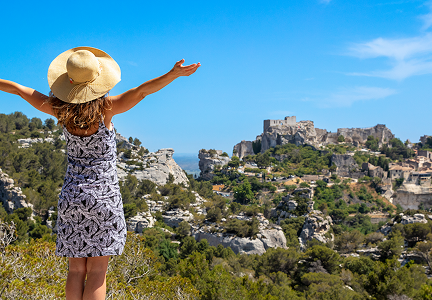
Two more worth your morning. Arles wears its Roman arena the way Nîmes does, but smaller and easier, and it is where Van Gogh painted the café terrace you have seen a hundred times. Meanwhile, Les Baux-de-Provence is a village carved into a limestone spur above the Alpilles, with a ruined fortress at the top and a view that goes to the sea on a clear day. Both are half an hour from Avignon.
A Toast to the South: The Wine Regions
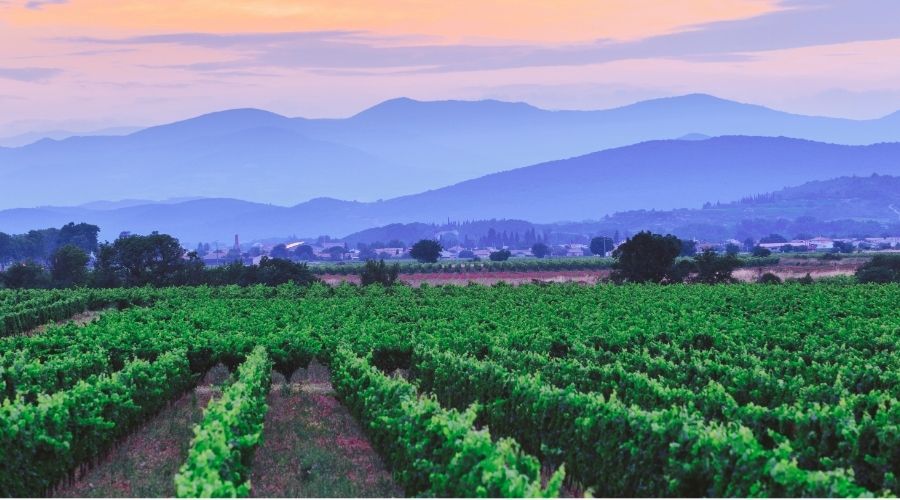
The south drinks well and eats better. Wine first — the vineyards are half the reason these landscapes look the way they do.
The Provence Wine Route: Savoring Rosé and More
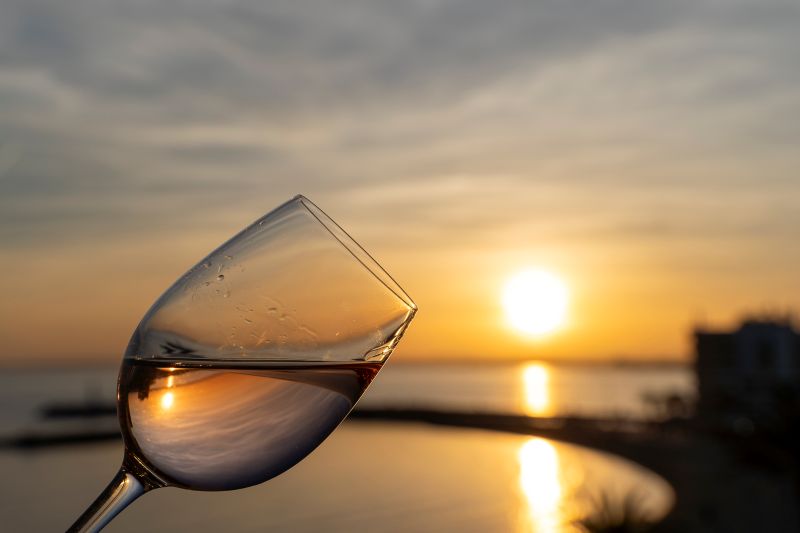
Provence is the reference point for rosé the way Champagne is for sparkling wine. It produces between 40 and 45 percent of all French AOP rosé and around 5 percent of the world’s and devotes roughly nine vines in ten to it. The region’s acclaimed rosé is a harmonious match for its sunny climate and the vibrant flavors of local dishes like bouillabaisse, ratatouille, and tapenade. Crafted from red grape varieties such as Grenache, Syrah, Cinsault, and Mourvèdre, and sometimes accented with white grapes like Rolle or Clairette, these wines boast a subtle pink hue and exquisite taste.
But Provence is more than just rosé. The area also offers an impressive array of red and white wines, with numerous styles and appellations to explore. The Provence wine route runs roughly 270 miles, and the drive between the estates is half the pleasure. Three appellations are worth knowing before you go.
- Côtes de Provence — the big one, some 50,000 acres spread between Aix and the Riviera, and the source of most of the pale pink wine you have ever poured. Expect white peach, citrus peel and a dry, mineral finish; it is a wine built for a lunch table in the shade.
- Bandol — a small run of terraced hillsides above the sea, planted mainly to Mourvèdre, and the appellation Provence takes most seriously. The reds are dark and peppery and will happily sit in a cellar for a decade; the rosés are fuller and more structured than their neighbors.
- Cassis — the same Cassis you met on the coast, and one of the rare corners of the south known for white wine rather than pink. White flowers, salt and citrus; order a bottle with the fish and the whole appellation explains itself.
Languedoc-Roussillon: Where the Vines Meet the Sea
Languedoc-Roussillon is the largest wine region in France and produces roughly a third of the country’s wine. The vines run from the beach to the hills behind. Its reputation rests on big red blends — Syrah, Grenache, Carignan, Mourvèdre — but that is only part of the story. Picpoul de Pinet is a sharp white made for oysters. Crémant de Limoux came before Champagne, or so the locals will tell you. Then there are the sweet Muscats of Rivesaltes and Maury.
Languedoc-Roussillon has more appellations than anyone could visit in a week, and the roads between them run through some of the emptiest, most beautiful country in the south. Three to start with.
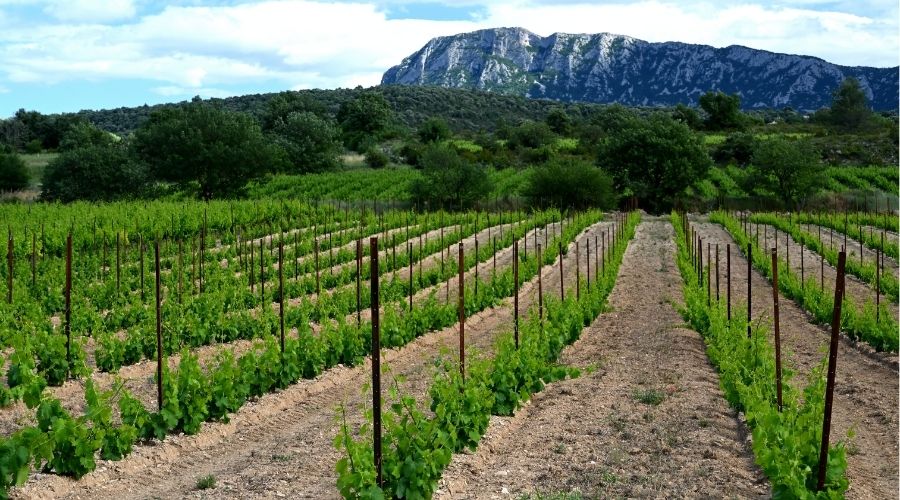
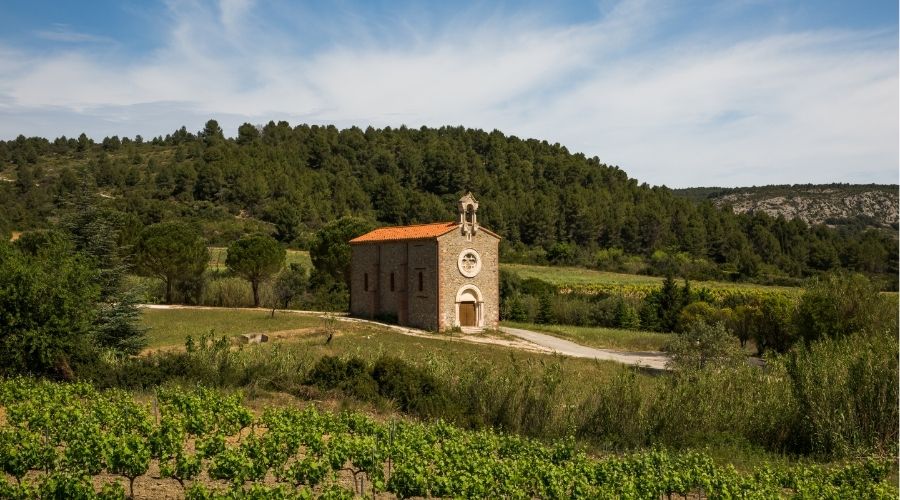
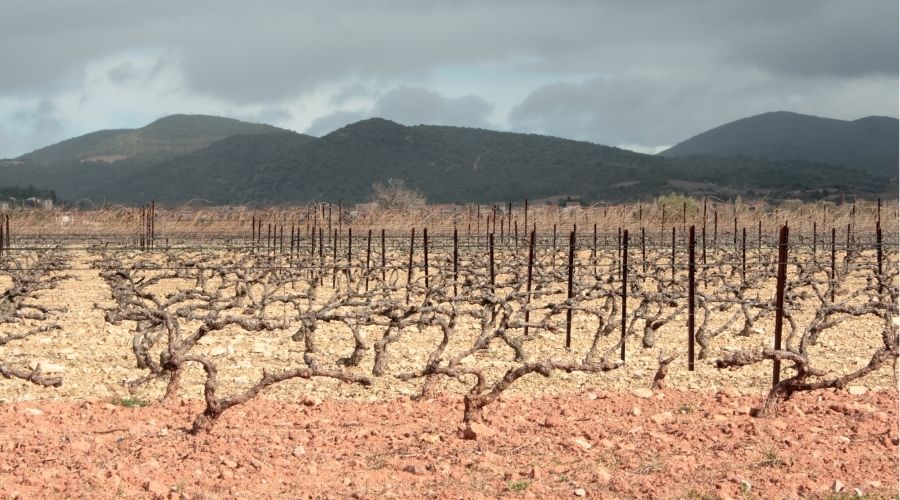
- Pic Saint-Loup — cool nights beneath a limestone ridge north of Montpellier give these reds a freshness you do not expect this far south. Syrah-led and peppery, with smaller quantities of rosé and white worth trying if you find them.
- Minervois — the hills between Carcassonne and Narbonne, where the soil changes every few miles and the wine changes with it. Full-bodied reds built on Syrah, Grenache and Carignan, warm and scented with garrigue (the wild scrub of the hillsides).
- Corbières — the largest appellation in the Languedoc, a wild sweep of stony hills running down toward Perpignan. Rustic, spicy reds with an herbal edge from the wind, and prices low enough that people tend to leave with a case.
What to Eat in the South of France
The south does not cook like the rest of France. There is no butter to speak of and no cream — it is olive oil, garlic, tomato, anchovy and herbs, which is to say it is Mediterranean food that happens to be French. Here is what I would send you to find.
The Dishes Worth Planning Around
- Bouillabaisse — in Marseille, and only in Marseille. The real version comes in two services: the broth first with rouille and croutons, the fish brought out separately and filleted at the table. It is expensive and takes hours. Order it a day ahead at a serious place rather than taking a chance on the Vieux-Port.
- Socca — Nice’s chickpea pancake, cooked in a wood oven, scraped onto paper and eaten standing up with black pepper. Go to the Cours Saleya market in the morning.
- Pan bagnat and pissaladière — a salade niçoise pressed into a round loaf until the oil soaks through, and a flatbread of slow onions, anchovy and olives. Both are lunch on a beach day.
- Brandade de morue — Nîmes’ own dish: salt cod whipped with olive oil and milk into something between a puree and a dream. Order it warm with toast.
What the Land and the Marshes Give You
- Gardianne de taureau and Camargue rice — bull stewed in red wine, served with the nutty red rice grown in the salt marshes. The Camargue is the only place in France that grows rice, and it does it beside the flamingos.
- Oysters from Bouzigues — raised in the Étang de Thau behind Sète, sweeter than Atlantic oysters, eaten at plastic tables by the water for very little money.
- Cassoulet — in and around Carcassonne, and only when the weather turns. Beans, duck confit, sausage, a crust broken and pushed back under seven times. It is a winter dish and a serious one.
Cheese, Sweets and What to Bring Home
- Cheese — Banon, wrapped in chestnut leaves and tied with raffia, and Pélardon, a small firm goat cheese from the Cévennes. Buy both at a market, not a supermarket.
- Sweets — calissons in Aix, almond and candied melon under a sheet of royal icing, and navettes in Marseille, orange-flower biscuits shaped like little boats.
One practical note. Lunch is served from noon until about two, dinner rarely before seven-thirty, and kitchens genuinely close in between. If you arrive in a village at three o’clock expecting a hot meal, you will be eating bread and cheese from the boulangerie — which, honestly, is not the worst outcome.
Travel Tips for the South of France
- When to go. April, May, June, September, and October. The light is good, the water is warm by June, and you can get a table. July and August bring heat and crowds together — it is why we pause our southern departures at the hottest point of the summer while our Normandy tours keep running. There is a month-by-month breakdown in our guide to the best time to visit the South of France.
- Rent a car for the west, take the train along the coast. Provence and Languedoc need a car; the villages are the point and buses are sparse. On the Riviera the opposite is true — the train between Cannes, Nice and Menton is cheap, frequent and skips the parking problem entirely.
- Autoroutes are tolled. Take the ticket at the entry, pay by card at the exit. The smaller routes nationales cost nothing and are far prettier, if slower.
- Park outside the walls. At Carcassonne, Aigues-Mortes, Les Baux and most hill villages there is a lot at the edge and no driving inside. Do not follow your GPS into a medieval street.
- Public beach or private? Both exist side by side. Private clubs rent you a lounger, an umbrella and a waiter; public stretches cost nothing and are perfectly pleasant. On the Riviera, reserve a club lounger in advance in July and August.
- The mistral. A cold, dry wind that comes down the Rhône valley and blows for three days, or six, or nine — the old saying insists on odd numbers. It clears the sky beautifully and ruins a picnic completely.
- Say bonjour first. Every shop, every bakery, every time. In the south it is not a pleasantry, it is the price of entry — and it changes the entire tone of what follows.
South of France: Common Questions
How many days do you need in the south of France? Eight to ten days is the sweet spot — enough for one region properly, plus a taste of a second. Five days works if you stay put and choose either Provence or the Riviera. Anything under four and you will spend more time driving than looking.
What is the best month to visit? September. The sea is at its warmest, the crowds have gone home, the vendange (wine harvest) is underway and the light turns golden. May & June are the close runners-up, and mid-June to mid-July is the only time for lavender.
Do you need a car in the south of France? For Provence and Languedoc, yes. For the Côte d’Azur, no — the coastal train handles it. Many travelers rent for the first week and drop the car in Nice.
Is the south of France expensive? That depends entirely on which south. The Riviera in August is one of the priciest stretches of coast in Europe. Ninety minutes west, in the Languedoc, a good lunch with wine costs less than a sandwich in Saint-Tropez.
Conclusion

If there is one thing I would ask you to take from this map, it is that the south is bigger with much more variety and complexity than its reputation. Everyone arrives wanting the Riviera. Most people leave talking about a market in a village they cannot pronounce. If you are still deciding whether to come at all, we made the case in ten reasons to go south.
We would love to show it to you ourselves. Our 8-day South of France small-group tour covers Provence, the Languedoc and the Camargue, staying eight nights in one hotel above the Mediterranean so you unpack exactly once.
À bientôt, mes amis — and print the map. It travels better than a phone in a village with no signal.
Julia