
Bonjour mes amis! Of all the questions we receive at TripUSAFrance about Northern France, this one comes up most often: “How many days do I really need in Normandy?” And the honest answer, as always, is ça dépend — it depends. It depends on whether you are coming as a pilgrim to the D-Day beaches, a lover of medieval villages, a foodie chasing Camembert and Calvados, or simply a traveler who wants to feel the soft Norman light on your face for a few unhurried mornings.
Normandy is a region of remarkable depth. It is the place where Allied soldiers stormed ashore on June 6th, 1944, and where William the Conqueror set sail nine centuries earlier. It is the home of half-timbered fishing ports, gothic cathedrals, Impressionist gardens, and a landscape of green pastures dotted with the dairy cows whose milk becomes some of the finest cheese in the world. To say “you’ve seen Normandy” after a single day is, with respect, to have barely scratched the surface.
Below, we walk through how to think about your time here — with honest recommendations from years of guiding travelers through this beautiful, beloved corner of France.
The Short Answer
If you want the quick version before we get into the details, here it is:
| Time You Have | What You Can See | Our Take |
|---|---|---|
| 1 day | Omaha Beach + American Cemetery + Pointe du Hoc | A meaningful pilgrimage, but rushed |
| 2 to 3 days | All five D-Day beaches + Bayeux + key museums | The sweet spot for most travelers |
| 3 to 4 days | Beaches, towns, Mont-Saint-Michel, Honfleur | The full Normandy experience |
| 5+ days | Add Rouen, the Alabaster Coast, Calvados country | A deep dive into the region |
Prefer not to drive?
Take our 7-Day Small-Group Tour of Normandy!
Why It’s Such a Difficult Question
Normandy is not one destination but many, and travelers come to it for very different reasons. Some come almost exclusively for the D-Day landing beaches and the museums and cemeteries that line that stretch of coast. Others come for Mont-Saint-Michel, that ancient abbey rising from its tidal bay. Still others come for Bayeux and its remarkable medieval tapestry (currently on loan in London in the the British Museum through July 2027), or for the half-timbered streets of Rouen where Joan of Arc was burned at the stake, or for Honfleur’s painterly harbor, or for Monet’s gardens at Giverny.
It is, in other words, a region that rewards depth. And there is the matter of rhythm — the long, lingering Norman lunch with a glass of cider, the late-afternoon walk along chalk cliffs, the moment of quiet reflection at a cemetery overlooking the sea. These are not interruptions to your itinerary. They are the itinerary.


1 Day: A Rushed Pilgrimage
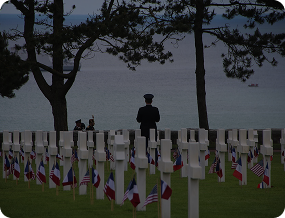
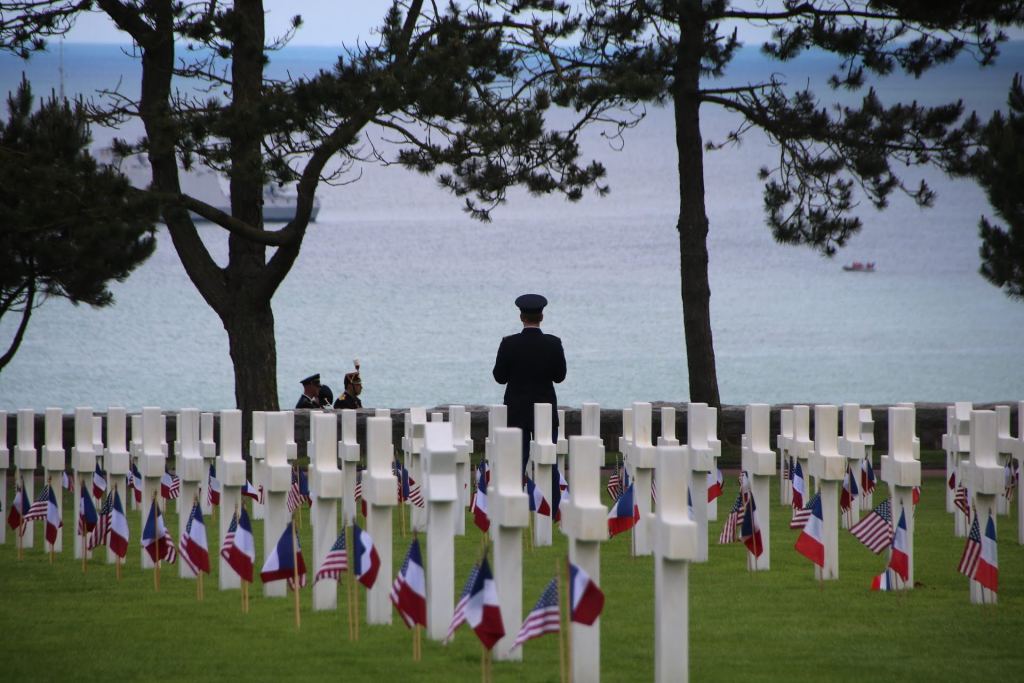
A single day in Normandy can only be one thing: a pilgrimage to the D-Day beaches. With dawn-to-dusk dedication and an early start from Paris (or, better, an overnight in Bayeux the night before), you can visit Omaha Beach, walk the white marble crosses of the Normandy American Cemetery, stand at the cratered cliffs of Pointe du Hoc, and feel the weight of what happened here. It will be moving. It will also be exhausting.
Best use of 1 day: Sleep in Bayeux the night before. Begin at the American Cemetery at opening (9 a.m.), then Omaha Beach, then Pointe du Hoc, then a late lunch in Vierville or Port-en-Bessin, then a quick visit to the Overlord Museum or the Caen Memorial Museum before driving back. It is a long, full day — but a profoundly meaningful one.
2 Days: The Bare Minimum
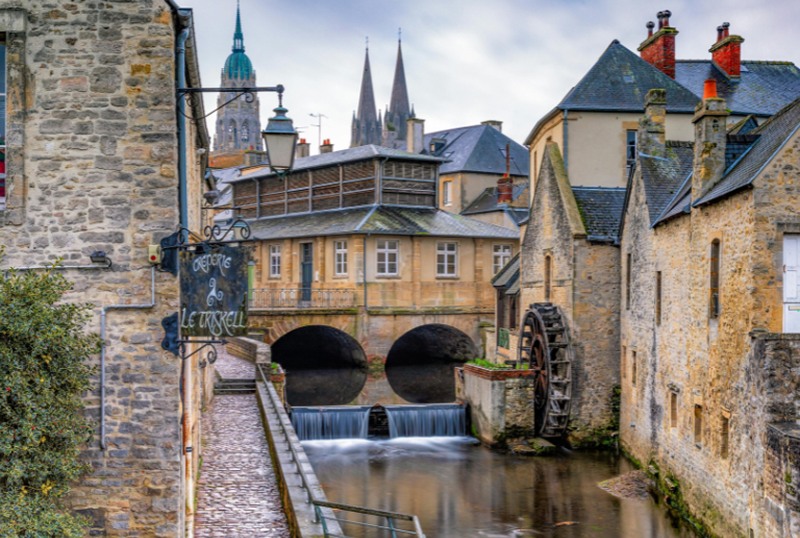
Two days in Normandy is, in our experience, the minimum for a visit. With two days you can technically see all five D-Day beaches, visit both major cemeteries (American and German), spend an afternoon in Bayeux with its medieval tapestry (when it’s back in town in 2027) and gothic cathedral, and absorb the historical context at one of the great museums — the Caen Memorial or the Overlord Museum or the Musée du Débarquement at Arromanches. While it is possible to fit it all in, you will still be rushed and won’t have time to really relax along the way.
Best use of 2 days: Base yourself in Bayeux for both nights. Devote the first day to the western beaches (Utah, Pointe du Hoc, Omaha, and the American Cemetery), and the second day to the eastern beaches (Gold, Arromanches, Juno, Sword) plus Bayeux itself. End the second evening with a quiet dinner of moules and Norman cider in a half-timbered bistro. This is the rhythm we recommend most often. See our companion piece on Normandy Map & Guide of Must-See Places for a full beach-by-beach breakdown.
3 to 4 Days: The Full Normandy Experience
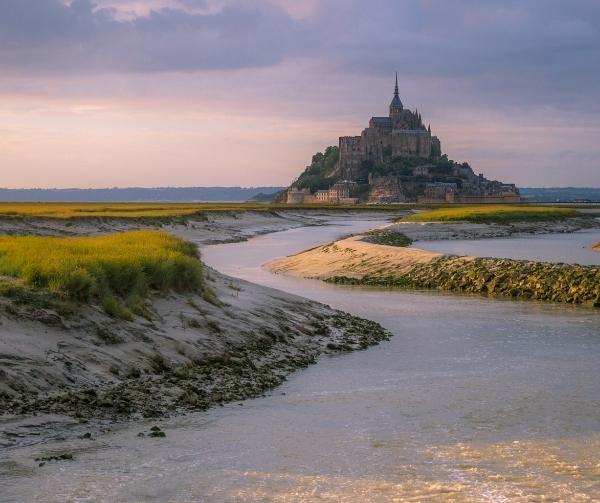
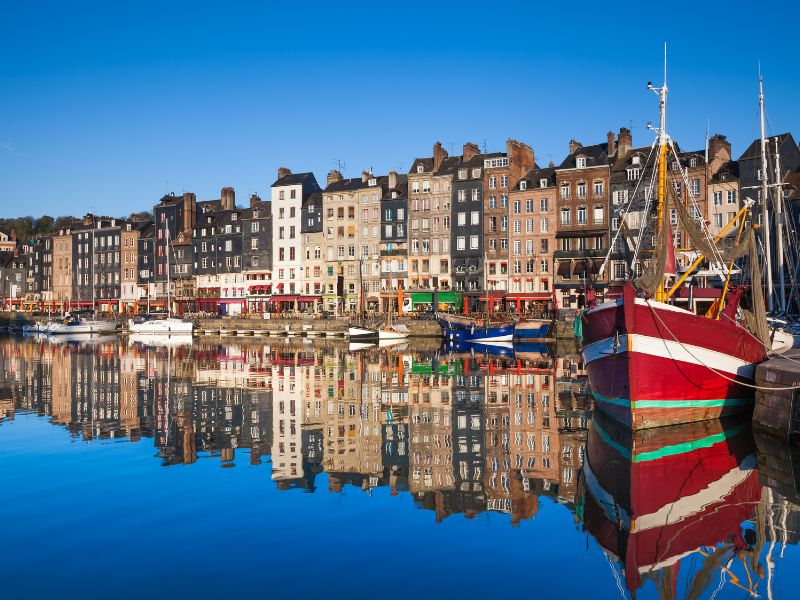
With three or four days, Normandy begins to truly open up. You can dedicate two days to the D-Day beaches and Bayeux, then add a day at Mont-Saint-Michel — that ethereal island abbey on the border of Normandy and Brittany, easily one of the most photographed and most spiritually striking places in all of France. With a fourth day, you can add Honfleur, the impossibly pretty fishing port that inspired Monet and Boudin (try to time your visit for the Saturday morning market). Or, detour to the cliffs of Étretat on the Alabaster Coast.
Best use of 3–4 days: Two nights in Bayeux for the beaches and the town. One night near Mont-Saint-Michel — ideally arriving at dusk and staying until sunrise, when the day-trip crowds disappear and the abbey is at its most magical. If you have a fourth day, a final night in Honfleur to soften the journey before returning to Paris or continuing on. This is the itinerary we suggest for travelers who want to leave Normandy feeling they truly understood it.
5+ Days: A Deeper Normandy
With five days or more, you have time for the Normandy that most visitors miss. You can add Rouen, the medieval capital with its towering gothic cathedral that Monet painted thirty times in different light. You can drive the Alabaster Coast from Étretat to Dieppe, with its dramatic white cliffs and pebble beaches. You can spend an afternoon at Giverny in Monet’s garden, with the famous water lilies and the green Japanese bridge. You can wander through Calvados country, tasting the apple brandy at small distilleries along the cider route. You can stop at Camembert itself, the little village that gave its name to the cheese.
Best use of 5+ days: Combine the D-Day beaches and Mont-Saint-Michel with the artistic Normandy of Giverny, Rouen, and Honfleur, and the gastronomic Normandy of the Cider Route and Camembert. This is the trip for travelers who want to understand the region in all its layers — history, art, landscape, and table..
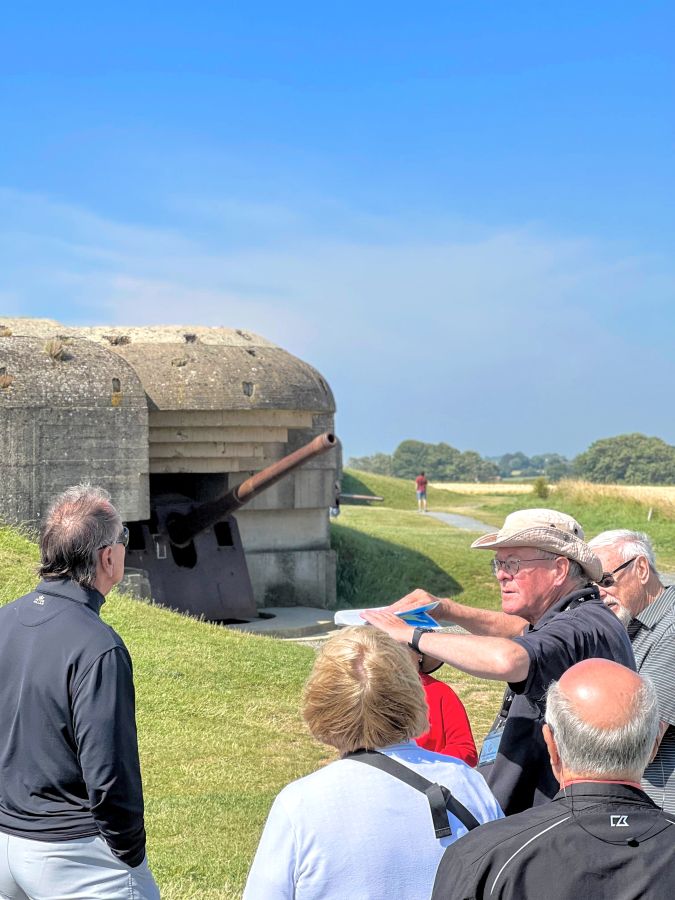
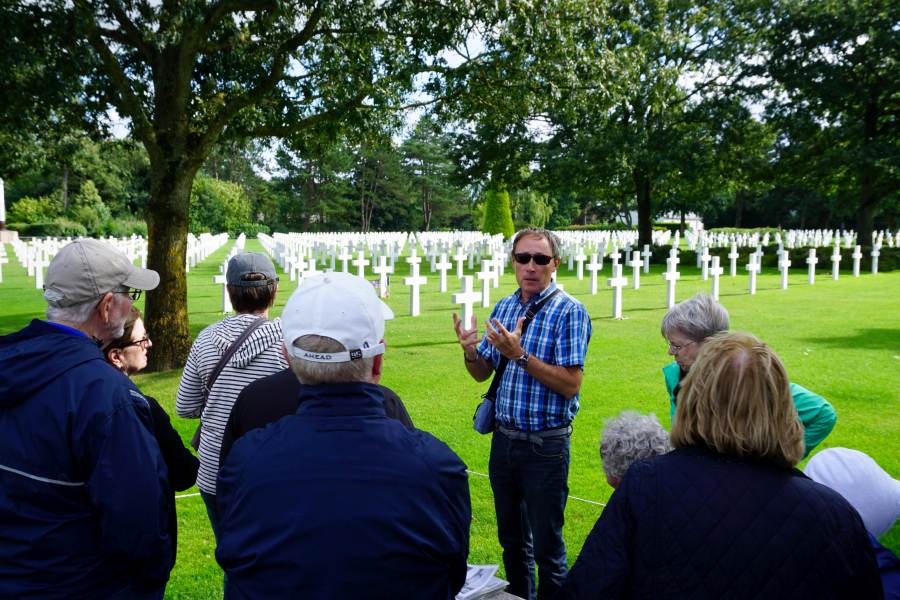
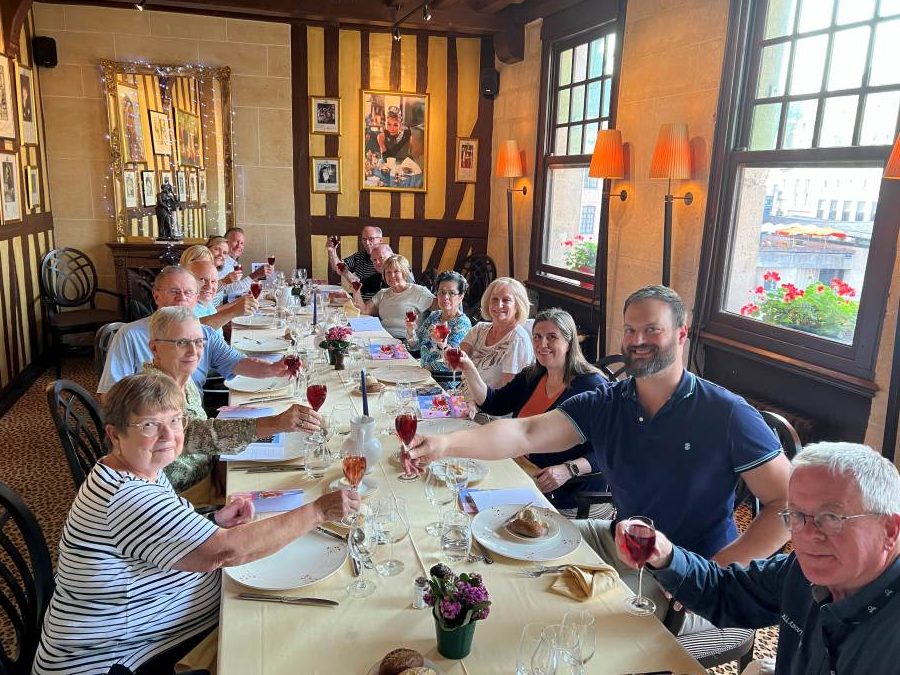
If you prefer not to drive, small group tours provide a stress free way to see all the highlights. The best part is that you don’t need to plan anything or do any research. On our 7 Day Normandy Tour, you will visit key sites, enjoy cultural experiences, and taste local cuisine while we take care of all the logistics. Traveling with a small group also means you are not alone on your journey. You will meet like-minded travelers who share your interests, creating opportunities to bond, share stories, and make new friends along the way.
Three Things That Should Influence Your Decision
Beyond the simple math of days, a few practical considerations will shape how long you really need:
- Your reason for coming. If you are coming specifically for the D-Day beaches — perhaps to honor a grandfather who landed there, or to walk the ground you have read about all your life — two focused days are enough, and you should not feel obligated to add Mont-Saint-Michel for completeness’ sake. But if you are coming for Normandy broadly, give yourself at least three.
- Time of year. Normandy in summer (especially around the June 6th anniversary) is busy. Hotels in Bayeux book out a year in advance for early June. Add a day of buffer in high season for parking, traffic, and the slower pace of crowded museums. In May, September, or October — some of our favorite months in Normandy — you can accomplish more in less time, and the soft Norman light is at its loveliest. While we usually steer away from July and August in other (hotter) regions of France, in Normandy we love these months. July and August have less rain than other seasons, the warmest days, longest daylight, and are surprisingly not as busy as other place like the South of France.
- Whether you are driving from Paris. Normandy is about a 2.5-hour drive from Paris (or a 2-hour train to Bayeux via Caen). Most travelers underestimate how much of “day one” is eaten up by the journey itself. If you only have two days total, consider taking the train the night before and waking up already in Bayeux — it will buy you several precious hours.
Our Honest Recommendation
If you press us for a single answer — and travelers always do — we will say this: two days is the minimum, and three to four days is much better. Two days lets you see the D-Day beaches properly without feeling too hurried. A third day gives you Mont-Saint-Michel, which is one of the great experiences of any trip to France. A fourth gives you Honfleur, Rouen, Giverny, or Étretat, and a soft, beautiful landing before you continue on your way.
Beyond four days, you are in the territory of travelers who want to understand Normandy deeply — and that is a wonderful place to be. But for most first-time visitors, three days is the answer we give. Long enough to honor the beaches, marvel at Mont-Saint-Michel, and taste a little Calvados at the end. Short enough to combine beautifully with Paris, or with our Ultimate South of France Road Trip if you are designing a longer French journey.
Ready to Visit Normandy?
Whether you have one day or seven, a trip to Normandy should not be missed. If you don’t want to spend days researching, drafting schedules and making reservations, we at TripUSAFrance would be delighted to have you join one of our 7-Day Normandy small-group tours. We’d be happy to answer any questions you have about the tour – send us a message!
À bientôt! Until soon, from the chalk cliffs and apple orchards of Normandy.
Keep Reading
10 Essential Tips for First-Time Visitors to France
Normandy Map and Guide – Must-See Places, Food, and Travel Tips